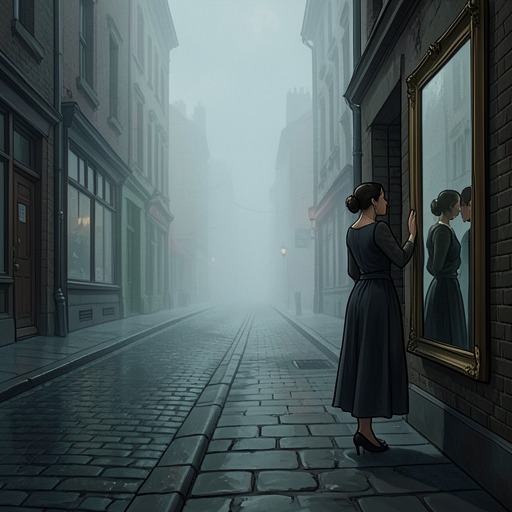
Jane Smith
The GuiltyJane Smith is a twenty-year-old woman whose institutionalized life is defined by a profound gap between her actual age and the much younger age at which she appears to function. Her late identification as Laura Barksdale’s daughter, followed by her murder, connects her private vulnerability to the family’s concealed history and the novel’s unfolding violence.
Identity and Background
Will Robie first encounters Jane in a room he estimates to be about twelve feet square, scarcely larger than a prison cell. The comparison makes the confinement of her circumstances immediate: she sits in a dull yellow hospital gown and worn white slippers, her short dark hair accentuating the sharp angles of her face. She does not acknowledge the visitors. The description establishes her through the room and through Will’s watching gaze, while offering little access to her own account of her life.
Her behavior is difficult for Will and Jessica Reel to interpret. Jane continues moving her hands and making noises, without responding when they approach. When Will addresses her as Laura, she looks up; the brief recognition unsettles him and prompts Jessica to catch her breath. The moment does not explain Jane’s condition, but it makes clear that the name has significance to her and to the people who have come to see her.
A file at the institution lists three medications, which Jessica identifies as antipsychotics. This detail establishes that Jane is receiving psychiatric treatment, but the evidence does not specify a diagnosis or explain the circumstances that led to her institutionalization. The narrative instead emphasizes observable particulars—her silence, movements, clothing, and response to a familiar name—leaving the limits of what others can understand about her visible within the scene.
Later, Laura Barksdale identifies Jane as the daughter Will has already met and clarifies that she was twenty years old, despite looking Laura’s age. Laura describes Jane as permanently four years old. That account reframes the earlier encounter: Jane’s apparent age is not her actual age, and her childlike presentation is part of the explanation for why other characters misunderstand who she is and what her life has been.
Death and Its Aftermath
Jane’s institutional confinement ends in a sudden execution. After Doug Dugan tells Will Robie and Jessica Reel that Jane is the reason he has called the police, they run down the hall to her open room. A small hole in the window, surrounded by radiating cracks, marks the path of the shot. Jane lies directly below it, dead from a bullet wound centered in her forehead; the noises she had made in life have ceased. The scene turns the earlier image of a woman who could not readily acknowledge visitors into a starkly physical absence, while the damaged window indicates that the killing was carried out from outside the room.
Laura Barksdale later identifies Jane as her first child and admits that she killed her. She describes tapping on Jane’s window and Jane approaching with wonder before Laura shot her between the eyes. The account gives the killing a calculated intimacy: Laura draws Jane toward the window, then fires at close range. Laura’s claim that Jane was permanently four years old frames the death through her mother’s judgment of the life Jane could have had, but Will Robie rejects any suggestion that Jane deserved to die or bore responsibility for her circumstances. Jane’s murder thus exposes the lethal violence concealed within the Barksdale family history, while leaving her own experience largely inaccessible beyond the fragments others reveal.
Family History and the Meaning of Her Identity
Laura Barksdale’s disclosure makes Jane not simply the institutionalized woman Will Robie has met, but Laura’s first child. The revelation also clarifies why the two women appear close in age: Jane is twenty, though Laura says she looks her mother’s age and describes her as permanently four years old. The mismatch between Jane’s adult age and childlike presentation had left her identity obscure to the visitors; Laura’s account connects those visible facts to a family history that had been concealed from them.
Laura denies that Emmitt Barksdale fathered Jane, saying instead that her own father was the child’s father. Her explanation places Jane’s conception within an incestuous family history and gives a disturbing context to Laura’s claim that the compulsion to violate family boundaries runs through the Barksdale men. Laura also refers to Emmitt as Jane’s brother and says he was too afraid to rape his little sister, while suggesting that he may have wanted to. The account distinguishes what Laura says happened from what she alleges Emmitt desired: it does not establish that he assaulted Jane, but it reveals the threat and sexual violence surrounding her family. Jane’s identity therefore emerges through other people’s disclosures, as a daughter and sister bound to a history of abuse that she cannot explain for herself.
Narrative Perspective and Significance
Jane’s story is largely filtered through what other people can observe and say about her. Will Robie registers her movements, sounds, and brief response to the name Laura, but the narrative supplies no account from Jane herself. Her recognition of the name is a small but consequential exception: it interrupts the visitors’ inability to read her and hints at a connection the scene has not yet explained. The gap between that moment and the later revelations makes her identity something reconstructed around her, rather than something she gets to narrate.
That imbalance persists after her death. Laura Barksdale explains Jane’s condition and recounts the killing, but also frames the life she took as one Jane could not meaningfully live. Will Robie’s insistence that Jane did not deserve to die challenges that framing without pretending to know Jane’s own experience. Her role in the family history is therefore revealed with terrible clarity, while her perspective remains absent: the novel exposes the violence surrounding her, yet leaves the person at its center only partially knowable.